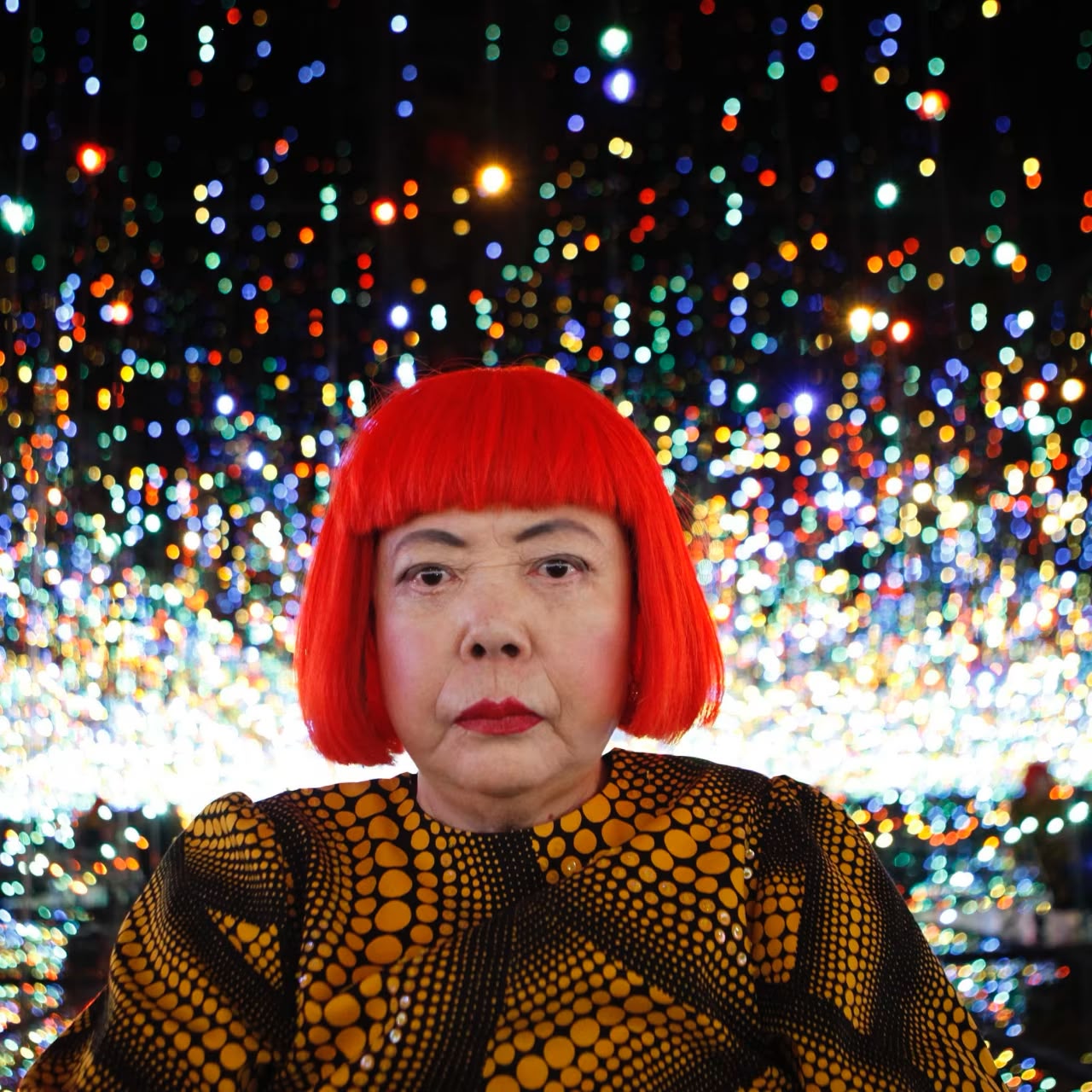
Yayoi Kusama, the internationally celebrated Japanese avant-garde artist whose signature polka dots, mirrored installations and immersive “Infinity Mirror Rooms” transformed contemporary art and captivated audiences around the world, has died at the age of 97.
Kusama died on August 14, 2026, at a hospital in Tokyo, according to an announcement from the Yayoi Kusama Studio and the Yayoi Kusama Museum. The announcement did not disclose a cause of death.
Her death marks the end of an extraordinary artistic career spanning nearly eight decades. Kusama became one of the most recognizable figures in contemporary art, developing a visual language built around repetition, infinity, vivid colors and her instantly identifiable polka-dot patterns.
Her work crossed paintings, sculpture, installation art, performance, literature and poetry. Among her most famous creations were the immersive Infinity Mirror Rooms, in which mirrors, lights and repeated forms created the sensation of entering an endless space. The installations eventually became major international attractions, drawing enormous crowds and introducing millions of people to her work.
Kusama’s distinctive style was influenced in part by hallucinations she said she had experienced since childhood. She transformed those experiences into repetitive patterns and visual environments that explored ideas of infinity, self-obliteration and the relationship between the individual and the universe.
Born in Matsumoto, Japan, in 1929, Kusama later moved to New York in the late 1950s and became involved in the city’s avant-garde art scene. She developed her celebrated “Infinity Net” paintings and produced experimental sculptures and performances while working alongside and interacting with influential artists of the era.
Her path to international recognition was not immediate. Kusama experienced periods of poverty and relative obscurity, while also confronting significant personal struggles. Yet she continued creating art and eventually emerged as one of the most influential Japanese artists of the modern era.
Her career received renewed international attention later in life, with major exhibitions at institutions including the Museum of Modern Art in New York and Tate Modern in London. Her mirrored rooms and pumpkin sculptures became especially popular with a new generation of museum visitors and helped make her one of the most widely recognized contemporary artists in the world.
Kusama’s pumpkin sculptures also became an important part of her artistic identity. Brightly colored and covered in her characteristic dots, the pumpkins reflected recurring themes of repetition, nature and infinity that appeared throughout her work.
Despite achieving global fame, Kusama remained deeply committed to the creative process. Her studio said she continued painting until her final days, describing a lifetime devoted to artistic creation and a continuing exploration of love and the eternal soul.
Her influence extended beyond museums and galleries. Kusama’s distinctive visual style reached fashion, popular culture and commercial collaborations, helping introduce her artistic vocabulary to audiences who might otherwise never have encountered contemporary avant-garde art.
The announcement of her death has prompted an international outpouring of tributes from the art world and admirers of her work. Museums, galleries, artists and fans are remembering a woman whose determination allowed her to transform deeply personal experiences into art that resonated across cultures and generations.
Kusama’s legacy is likely to endure through the countless paintings, sculptures and installations she created throughout her lifetime. Her Infinity Mirror Rooms, polka dots and pumpkins have become enduring symbols of contemporary art, while her willingness to challenge conventions helped reshape perceptions of what an artist could achieve.
At the time of the announcement, no cause of death had been disclosed. Her studio and museum have asked that her artistic wishes be carried forward, emphasizing the continuing power of art to offer hope and strength.
Yayoi Kusama leaves behind a remarkable body of work and a legacy that reaches far beyond Japan. For generations of artists and audiences, she will be remembered as a pioneering creative force who turned repetition into wonder, personal struggle into artistic expression and the idea of infinity into an experience millions could enter and see for themselves.
The art world now mourns one of its most distinctive and influential figures, whose work made the infinite feel tangible and whose unmistakable dots became part of the visual language of the modern era.